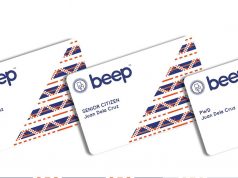


The issuer of beep cards or stored value cards used in railways stated that it is not responsible for any issues that commuters may encounter if they use “beep charms” or “other unauthorized merchandise” for travel.
AF Payments Inc. (AFPI), the exclusive issuer of the beep cards used for travel on the MRT-3, LRT-1 and LRT-2, has raised concern over the growing use of “beep charms” and other accessories by some commuters in place of the standard beep cards.
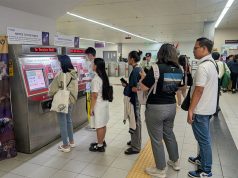
It was reported that, instead of beep cards, certain commuters have been tapping “beep charms” or keychain versions of beep cards at station turnstiles.
AFPI said that it will not be held liable for any issues commuters may face when using such “unauthorized merchandise.”
“Only legitimate beep cards sold through authorized sales outlets are allowed for use in LRT Lines 1 and 2 and MRT 3 and in selected buses and modern jeeps,” it said in an advisory posted by the page of the beep card on Tuesday, August 26.
AFPI also advised the public to report any “suspicious use of fake beep products” to its customer service desk with the following contact lines:
- Landline: (02) 8737-9622
- Globe: 0917-512-1319
- Smart: 0998-581-9675
- Email: [email protected]
“Thank you for your cooperation and support for genuine beep fare media,” it said.
APFI President and CEO Jojo Carpio stated that the method involves extracting the chip from a legitimate beep card and transferring it to a “charm” for use in railway travel.
“Kumbaga, masyado silang matalino,” he said in a press conference.
These “beep charms” are reportedly being sold online at prices ranging from P500 to P800, depending on their style and design.
This practice is believed to be one of the contributing factors to the current shortage of beep cards.
The Department of Transportation (DOTr) also issued a warning against patronizing “beep charms” and unauthorized sellers of beep cards online.
DOTr Secretary Vince Dizon said he has already instructed the management of the MRT, LRT-1 and LRT-2 to install additional CCTVs to monitor and prevent the possible hoarding of beep cards.
“Nag-install na rin tayo ng CCTV kung saan alam natin na madalas ginagawa itong pag-ho-hoard. Huhulihin sila on the spot, nagpalabas na rin kami ng panawagan sa lahat ng stations, na ‘pag sila nahuli o nagbebenta online, may kulong ‘yan at may multa na napakataas. Seryoso kami dito, hindi kami nagbibiro dito,” he said.
“Susulat kami ngayon, susulatan namin ang Lazada, Facebook, directing them to shutdown this sites… At ‘pag hindi sila nag-shutdown, pati itong online selling [apps] na ‘to, pakakasuhan ko din. Pati sila madadamay sa mga kasong ipa-file natin,” Dizon added.
Carpio said that beep cards, which are originally priced at only P30, are being sold online for as much as P200.
“Wala pong nilalabas na ganito ang AFPI Payments,” he said, referring to the “beep charms.”
Earlier this month, the AFPI warned commuters against purchasing beep cards from unauthorized online sellers, stating that doing so could result in receiving “defective, counterfeit, or overpriced” cards.
RELATED: ‘Babala’: Public warned vs unauthorized online resellers of beep cards