


- Philippine peso hits 60.776 per dollar
- South Korean stocks fall over 5%
- Indonesian rupiah weakens to 16,993 per dollar
The Philippine peso hit a record low on Monday and the Indonesian rupiah stopped short of touching a historic trough of 17,000 per dollar as the country’s central bank introduced a new tool for banks to manage foreign-currency liquidity.
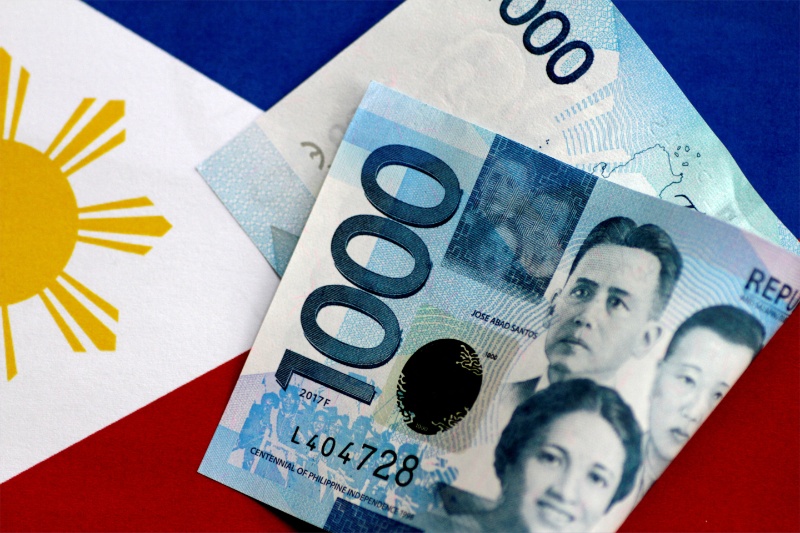
The Philippine peso <PHP=> hit a low of 60.776 per dollar, while stocks in Manila <.PSI> tumbled 2.5%, as the net oil importer grapples with an “imminent danger of a critically low energy supply.” A number of oil-importing countries in the region have been hit hard by the U.S.-Israeli war on Iran, which has effectively closed off the Strait of Hormuz, a key transit point for Middle Eastern oil.
Indonesia, another oil-importing country, continues to experience massive outflows due to concerns about the impact of elevated oil prices, compounding persistent concerns over fiscal and governance risks.
Jakarta stocks <.JKSE> fell more than 2%, extending monthly losses to around 14% and putting them on course for their worst month since March 2020.
Foreign investors have pulled out 21.37 trillion rupiah ($1.26 billion) from Indonesia’s stock markets so far this month, the largest outflow in at least over a decade, according to LSEG data.
Its currency, the rupiah <IDR=>, wallowed at around 16,900 a dollar, a stone’s throw from its record low of 17,000.
Bank Indonesia on Monday implemented new foreign exchange repo transactions using its FX-denominated securities, providing banks with an alternative for liquidity management, particularly foreign exchange liquidity.
“The instruments function as high-quality, short-term collateral: Banks obtain the dollars they need, repay the loan when cash returns, while the collateral stays on the balance sheet,” said Wei Li, head of multi-asset investments at BNP Paribas.
“The repo’s market-neutral design limits immediate pressure on the IDR/USD rate, unlike a direct spot sale that would inject rupiah liquidity.”
Elsewhere in emerging markets, the Indian rupee<INR=IN> rallied sharply to 93.85 per dollar after the central bank tightened limits on banks’ foreign exchange positions.
Malaysia’s benchmark stock index <.KLSE> dipped 1.5%, while stocks in South Korea <.KS11> and Taiwan <.TWII> fell as much as 5.3% and 2.4%.
The conflict in the Middle East and its impact on global energy prices and supply continues to roil financial markets worldwide. Oil-importing Asian emerging economies are particularly exposed, with higher prices already triggering capital outflows and pressuring currencies.
Foreign investors have pulled 34.71 billion baht ($1.06 billion) out of Thai equities <.SETI>, while stock markets in South Korea and Taiwan have seen outflows worth $19.71 billion and $25.74 billion, respectively, exchange and LSEG data showed.
HIGHLIGHTS:
** Taiwan’s opposition leader to visit China next month, ahead of Trump
** India bonds set to rise as borrowing plan offers much-needed relief
** Bank of Japan chief signals vigilance to yen moves, impact on economy
| Asia stock indexes and currencies at 0358 GMT | ||||||
| COUNTRY | FX RIC | FX DAILY % | FX YTD % | INDEX | STOCKS DAILY % | STOCKS YTD % |
| Japan | <JPY=> | +0.35 | -1.94 | <.N225> | -3.36 | -0.49 |
| China | <CNY=CFXS> | +0.04 | +1.15 | <.SSEC> | 0.23 | -1.16 |
| India | <INR=IN> | +0.96 | -4.30 | <.NSEI> | -1.18 | -13.70 |
| Indonesia | <IDR=> | -0.15 | -1.85 | <.JKSE> | -0.66 | -18.47 |
| Malaysia | <MYR=> | -0.20 | +0.90 | <.KLSE> | -1.43 | 0.47 |
| Philippines | <PHP=> | -0.34 | -3.09 | <.PSI> | -2.38 | -3.67 |
| S.Korea | <KRW=KFTC> | -0.04 | -4.79 | <.KS11> | -3.07 | 25.10 |
| Singapore | <SGD=> | +0.07 | -0.16 | <.STI> | 0.02 | 5.44 |
| Taiwan | <TWD=TP> | -0.40 | -1.78 | <.TWII> | -1.55 | 12.55 |
| Thailand | <THB=> | +0.35 | -4.06 | <.SETI> | -0.24 | 14.60 |
($1 = 16,988.0000 rupiah)
($1 = 32.8100 baht)
($1 = 31.9940 Taiwan dollars)
($1 = 1,512.6100 won)
—Reporting by Shivangi Lahiri in Bengaluru; Editing by Thomas Derpinghaus