


A record 102 matches have been played, leaving just two games to decide the 2026 FIFA World Cup: the third-place playoff (between France and England) and the final.
The championship match, to be played on Sunday evening US time, will see Spain take on Argentina in a fitting finale between the world’s two highest-ranked teams.
So, how did each team reach the final – and how may it play out?
How we got here
Both sides enter the final unbeaten after seven matches.
Spain arrive as the reigning European champions and the world’s number two-ranked nation, while Argentina is the reigning Copa América champion, defending World Cup holders and ranked first in the world.
Spain are arguably the tournament’s most tactically complete side.
Luis de la Fuente’s team has been built on patient possession, relentless pressing and exceptional defensive organisation.
They dismantled France 2-0 in the semi-final, conceding very few clear chances, and have allowed just one goal throughout the tournament. In sports science terms, Spain have built towards peak performance for the final, after opening the tournament with a draw against Cape Verde.
What has characterized the Spaniards is that no single player has stood above the rest – the team’s success has been shared across the squad.
This is a complete team coached by a manager at the peak of his powers. Six players have scored at least one goal, although Mikel Oyarzabal has scored five.
Goalkeeper Unai Simón has been a rock and made some brilliant saves, and used intelligent positioning outside the box. Dani Olmo, despite being substituted twice, has been a constant attacking threat, while captain Rodri has also gone about his work with little fanfare, marshalling the team superbly from midfield.
The Messi factor
Argentina is also a great team, but a different type of great team, and there is one standout player.
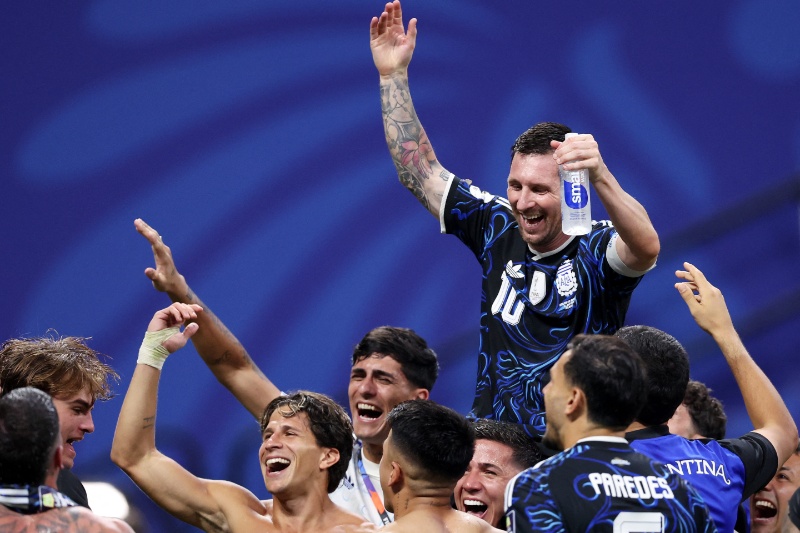
There is little left to write about Lionel Messi that has not already been said. Yet the brilliance of this Argentine team is not simply built around his genius – it is built around the extraordinary commitment of the ten players around him.
They run for him, defend for him, sacrifice for him, and believe in him completely.
Messi is afforded the freedom to conserve his energy, drifting into the spaces where he can do the greatest damage. His teammates carry the physical burden, allowing their captain to deliver moments of magic when they matter most.
He is not merely Argentina’s leader – he is their inspiration, their symbol, and the figure who carries the hopes of an entire nation. Throughout the tournament, whenever Argentina faced a moment of crisis, the players turned to Messi with the belief he would find a way.
He nearly always does, and he did it again in their unforgettable victory over England.
That win represented more than qualification for another final. For many Argentinians, it carried the emotional weight of Diego Maradona’s legacy and offered the opportunity to defeat England on soccer’s biggest stage through skill and determination rather than controversy.
It was another defining chapter in Argentina’s remarkable World Cup story.
How will the final play out?
Tactically, the match promises a fascinating contrast.
Spain will seek to monopolise possession, patiently moving the ball until openings appear, while Argentina is comfortable defending compactly before striking quickly (usually through Messi).
Whichever side controls the tempo in midfield is likely to have one hand on the trophy.
Spain will try and play with the finesse they showed against the French, and Rodri will try to ensure they avoid a “street fight”, which the Argentinians may try and bait them into.
History also adds another layer. Spain is chasing its second World Cup after the triumph in 2010, while Argentina is pursuing a fourth title and back-to-back World Cups – an achievement not secured in more than six decades.
The final therefore offers Spain the chance to cement a new era of dominance, while Argentina seek to extend one of the greatest periods in its history.
It is a fitting climax to the tournament: the world’s number one-ranked team against the ranked team second. The defending champions against the European champions, and almost certainly Messi’s final World Cup appearance.
In a sport now dominated by players who run all day and are increasingly similar, with an abundance of machine-like footballers and fewer players blessed with extraordinary skill and tactical understanding, this World Cup has produced some remarkable goals and performances.
Harry Kane, Jude Bellingham, Erling Haaland and Kylian Mbappé have all produced moments of brilliance.
But the final 25 minutes of the semi-final between England and Argentina, after England had taken a 1-0 lead, demonstrated that there has never been, and perhaps never will be, another player quite like Messi.
We may be about to marvel at Messi for the last time. It is hard to believe he will not find a way to overcome this outstanding Spanish team.
Steve Georgakis, Senior Lecturer of Pedagogy and Sports Studies, University of Sydney. This article is republished from The Conversation under a Creative Commons license. Read the original article.