


A commuter bus on an expressway drew criticism for a lane-switching maneuver that was perceived as dangerous and reckless by other motorists.
Automotive publication VISOR posted dashcam footage on Tuesday, October 7, showing the incident along the North Luzon Expressway (NLEX) earlier that morning.
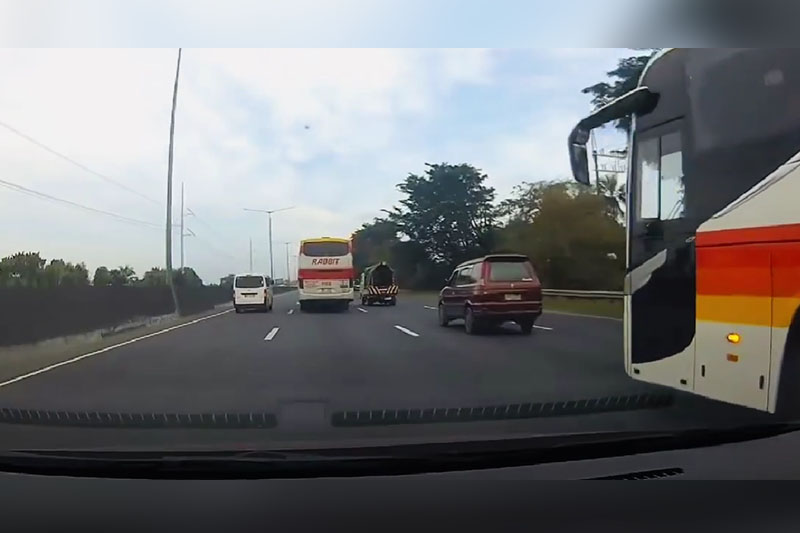
The video shows a private vehicle traveling in the second lane from the center, while a bus can be seen on the rightmost lane, closest to the shoulder of the road.
Moments later, the bus activates its left turn signal, indicating its intention to move into the next lane, the third lane from the center.
It successfully merges into that lane, which is directly to the right of the private vehicle.
However, the bus continues to shift left and encroaches into the same lane as the private vehicle, despite the latter maintaining a steady speed and showing no signs of slowing down.
This prompted the driver of the private vehicle to honk, warning the bus of their presence.
The bus halted its lane switch and remained in the lane to the right of the private vehicle.
The private vehicle then accelerated, eventually passing the bus.
“Good morning, maliban sa mga dangerous bus drivers,” VISOR said in its caption.
The post has garnered 3,800 reactions and 1,100 comments from Filipinos, with many condemning the bus for its reckless maneuver.
“Pagka-signal, sabay lipat agad ng lane? Agad-agad ‘yan??” VISOR wrote in the comments section.
“Galing mag-change lane, 2 in 1,” another Facebook user wrote with sarcasm.
“Grabe… porke’t malaki, basta basta na lang?” a different online user commented, referring to the bus.
“Mali din pag-change lane ng bus, imagine [three] lanes agad ang icu-cut mo? Isa-isa lang dapat for safety ng ibang gumagamit din ng kalsada. Galing shoulder, pupunta agad sa inner?” another wrote.
When switching lanes, drivers are expected to do so one lane at a time, allowing other motorists enough time to understand their intention and respond safely.
The proper procedure includes activating the signal light in the direction of the intended lane change (either right or left), checking side mirrors and blind spots, identifying a safe opportunity to switch and then completing the maneuver.
If another lane change is needed, the same steps must be repeated.
A “safe time” to switch lanes means there is sufficient space in the target lane for the vehicle to merge without risking a collision with another vehicle.
One common mistake is changing lanes abruptly without slowing down or properly signaling, which can prevent other drivers from reacting in time and increase the risk of accidents.