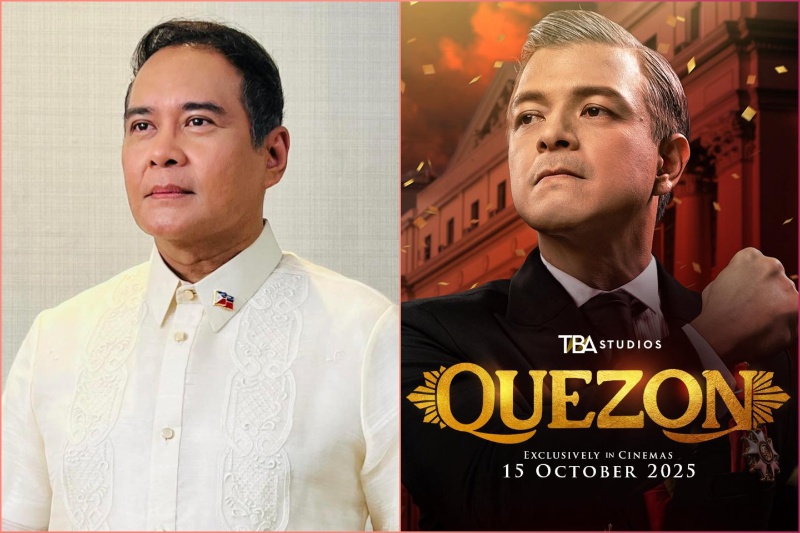



Actor John Arcilla, a descendant of former President Manuel L. Quezon through his mother, responded to social media posts by Quezon’s grandson Ricky Avanceña criticizing the new film “Quezon.”
What Quezon’s grandson said
Avanceña made headlines after venting online his frustrations while attending a talkback session for the film, recounting how he felt silenced during the discussion.
“F****** Jericho Rosales tried to block me, in effect canceling a Quezon, from a ‘Quezon’ movie which sullied his reputation… So ayaw nila marinig ang opinyon ng isang direct descendant?”
He criticized the film for what he perceived as disrespectful portrayals of his grandfather, saying:
“T*** i** nilalako nila ang pambababoy sa alaala ng mga taong patay, at di nila ako hahayaan na magpahayag ng damdamin at ipagtanggol sila?”
Avanceña, however, stressed he is not discouraging others to watch the film.
“So, I’m not saying don’t watch the movie, hayaan na natin kumita yung mga bayarang p*** na ‘yun sila. Watch it, and then join me in a social media defense mga Quezon followers,” the grandson said.
“Nobody said he was a hero, so labas s’ya sa kabaduyan ng ‘Bayaniverse’.
He was a President, and the best ever, most incorruptible,” he added, referring to the series of films based on Philippine history.
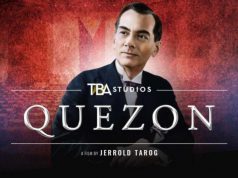
“Quezon” follows the success of the box office hits “Heneral Luna” (2015) and “Goyo: Ang Batang Heneral” (2018). All were produced by TBA Studios and directed by Jerrold Tarrog.
What John Arcilla said
Reacting to Avancena’s post, Arcilla, who portrayed the the titular character Antonio Luna, the first installment of “Bayaniverse” trilogy, acknowledged the tension but offered a measured perspective, with both empathy for his family and respect for artistic freedom.
He wrote:
“Ricky, I, or anyone else, cannot blame you. Our family is still very much alive; they should have considered consulting the direct descendants and relatives… The reason no one has made a film about Juan Luna, for instance, is that his wife’s family does not want the story told from someone else’s point of view—and I am not sure if that principle applies here as well, especially since the direct descendants who are still alive were not even consulted…
“We share the same sentiment. All the people involved are my colleagues and friends, and while I cannot apologize on their behalf—because, as you said, they have their own principles and freedom of expression—I believe that if the living family and descendants feel bothered by the matter, you/we are fully entitled to our reactions, or even to seek proper clarification or action if necessary.”
The actor also touched on the film’s claimed satirical angle, suggesting that while the filmmakers might argue it as satire, certain portrayals felt too direct and preachy, especially in the depiction of Quezon’s persona through the fictional character Joven Hernando.
The character of Joven, a young journalist covering the revolution, is central in the film “Quezon.”
Arcilla added:
“Still, I understand that the ‘satirical’ angle might be the film’s best defense. It looked satirical in the way they styled the early rigodons of political opponents and some of the ‘actings’ but the content itself doesn’t feel like one. The preachy and direct characterization of our Lolo’s persona was explicitly stated by the fictional Joven—who represents the audience—right to his face. That’s what truly feels bothersome.”
“I feel you, ‘nsan,” he concluded.
About ‘Quezon’
“Quezon,” which premiered in cinemas nationwide on October 15, stars Jericho Rosales as the titular character, Benjamin Alves as young Manuel L. Quezon, Mon Confiado as Emilio Aguinaldo, Iain Glen as Leonard Wood, Cris Villanueva as Joven Hernando, Aaron Villaflor as young Joven, and Karylle Tatlonghari as Aurora Quezon, and more.
The film focuses on the titular Manuel L. Quezon during the American occupation.
The full synopsis goes: “When his fight for Philippine independence from the United States is put to the test, Manuel L. Quezon finds himself playing the brutal game of politics to outmaneuver his rivals—including Leonard Wood, Sergio Osmeña, and Joven Hernando.
“In his relentless quest for power, he eventually faces off with Emilio Aguinaldo in the 1935 Philippine presidential elections, using charm and favoritism as both weapons and currency, in a campaign that ultimately changes the face of Philippine politics and history.”
RELATED: ‘Gayang gaya’: Jericho Rosales’ role in ‘Quezon’ excites Filipinos | ‘What an adventure’: ‘Quezon’ star Iain Glen shares filming experience in Philippines | Two Quezons: TJ Trinidad visits ‘Quezon’ set to support Jericho Rosales
What the actors, director said
According to those present during the talkback session with the filmmakers and actors behind “Quezon”, the discussion continued with Tarog explaining that the film is a “conversation with the Filipino public.”
“If you take the film by itself, you will only see the negative side. The film is a conversation with Filipino public. Since it is a conversation, we would have already known his accomplishments,” the director was quoted as saying.
Jericho, meanwhile, explained that playing the character made see the former president’s imperfections.
“There are no perfect people. I was trying to wrap my head around this person, this character, who has led the country to independence and done great things and still is so flawed,” Jericho was quoted as saying.
According to one of the audience members, “another audience member introduced herself as a descendant of Quezon and praised the film after Avanceña’s tirade stating that ‘Quezon’ was her favorite out of Tarog’s films.”