

Balancing tourism growth with environmental protection is a continuing concern in Palawan, one of the Philippines’ most sought-after island destinations, as tourist arrivals continue to rise across its islands, lagoons and dive sites.
With the government targeting over 6.4 million tourist arrivals in 2026, higher than in previous years, more pressure may be felt in established destinations like Palawan, where demand continues to grow for both mass tourism and high-end island experiences.
In northern Palawan, luxury island resorts continue to expand alongside mainstream tourism. The dynamics between development and environmental considerations can be observed in how new projects are built, operated and experienced.
At Sunlight Ecotourism Island Resort (SETIR) in Naglayan Island, Culion, that balance takes a more structured form, where high-end island accommodation is paired with sustainability measures folded into daily operations.
Getting to SETIR
Getting there can already feel like part of the journey.
From Pampanga, travelers fly to Busuanga Airport in Coron, Palawan. Sunlight Air, a boutique airline, operates direct flights from Clark, which has made access to northern Palawan easier in recent years.
From the airport, the road to Coron town is short but busy, lined with tour vans, accommodations and dive shops. Sunlight Hotel Coron often serves as a stopover for guests heading out to the islands, reflecting how Coron town has become a staging point for island hopping.
From the hotel, it is another transfer out to sea. The boat ride from SHC to SETIR takes around 30 to 45 minutes, depending on the weather and sea conditions.
Arrival is quiet but organized. Guests are met with cold towels and drinks before being led deeper into the property, away from the dock and into the island’s interior.
A private island resort experience
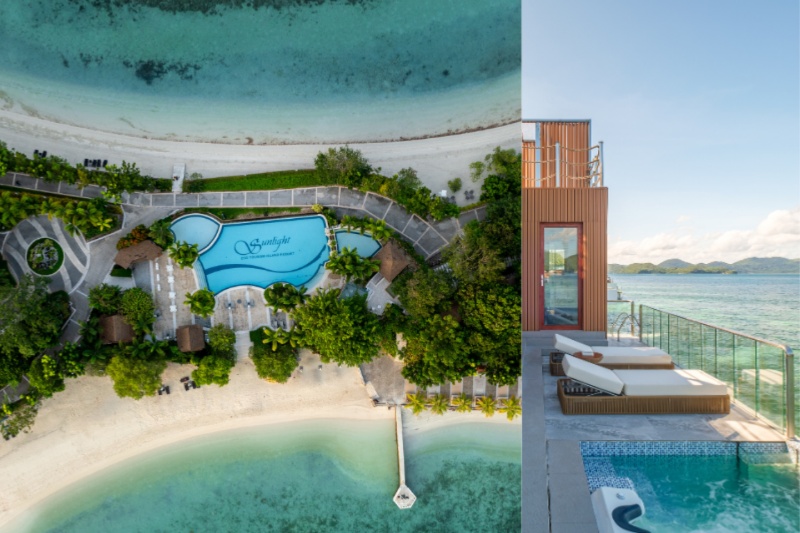
SETIR is laid out as a self-contained island resort, with villas, restaurants and activity areas spread across the property.
The accommodations vary in size and layout, from smaller villas for couples to larger units designed for families or groups.
Among the most prominent are the Salepan Villas on the sunset side. These two-storey units sit slightly elevated, with private plunge pools, glass floor panels and rooftop decks that open to sea views. Some come with butler service, although the setting itself is often a main draw.
Across the island, Sirakan Villas offer a quieter atmosphere, geared more toward couples, with similar glass floor features and open views of the water below.
Movement around the island is handled mostly by electric buggies, though bicycles are available and walking paths are also used, especially in the early morning when temperatures are more comfortable.
Island-based luxury tourism
Activities inside the resort are largely centered on the coast.
Guests can go snorkeling or diving, take kayaks along the shoreline, or join organized island-hopping trips across nearby lagoons and reef systems in the Calamian Islands. The water is never far away and inland paths often open to sea views.
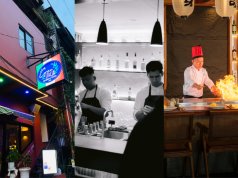
Dining is spread across several in-house concepts, including Sun Café, Island Garden Restaurant, Mangrove, Hikari, Xiang Hotpot and KBBQ, Poolside Patio, Ric’s Place, Café Adlaw and Cerveza Reál. Each space offers a different dining setting, from casual meals to more curated spaces.
Between activities guests spend time on slower-pace options such as spa treatments, long sunset viewing, or staying inside villas designed to open toward the sea.
Sustainability woven into operations
Sustainability at SETIR is not presented as a separate program but is integrated into how the island operates.
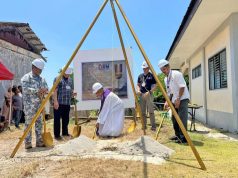
One of its more significant shifts has been the move toward solar energy, introduced in partnership with Huawei through a smart microgrid system. The transition, according to SETIR, is aimed at reducing reliance on diesel generators, which have long been necessary for powering remote island resorts like SETIR but come with logistical costs and environmental impacts.
Marine protection is also emphasized, particularly for guests joining snorkeling or diving activities. Guidelines discourage touching coral, while reef-safe sunscreen is encouraged to help reduce impact on surrounding waters.
Mobility is also part of this approach, with walking and biking encouraged over frequent buggy rides, although this is not always strictly followed during peak heat hours.
Tourism pressure in Palawan
Palawan remains one of the country’s most visited destinations, drawing travelers for its limestone cliffs, clear lagoons and rich marine biodiversity.
But its popularity has also placed pressure on areas like Coron and its surrounding islands, where questions of carrying capacity and environmental stress continue to be raised.
The growth of large-scale island resorts sits within this context, where development and conservation are increasingly expected to exist side by side.
The challenge ahead
Luxury island tourism in Palawan continues to expand, while questions remain about its sustainability.
During a stay on the island, signs of environmental pressure can be observed. At times, floating trash can be seen in nearby waters.
A resort staff said some of the waste drifts in from surrounding areas, noting that environmental issues often extend beyond the boundaries of a single property. They also pointed to initiatives such as “Scubasura,” where divers help collect underwater and coastal waste.
Tourism in these areas continue to grow, raising questions about how it can be managed in ecologically fragile and heavily visited spaces.
At SETIR, sustainability is presented as part of the guest experience rather than a separate feature. It shapes how visitors move, what they are reminded of and how the island is navigated.
The effectiveness of this model over time depends on consistency in implementation.
In a place where tourism depends so heavily on the sea, the balance between luxury and environmental responsibility remains an ongoing consideration.
—
Editor’s note: The tour to SETIR was hosted by Sunlight Hotels and Resorts to promote tourism in the area. At no stage does the host organization have a say on the stories generated from the coverage, interviews conducted, publication date and story treatment. Content is produced solely by Interaksyon following editorial guidelines.