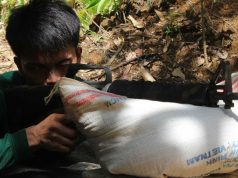


A city agricultural office in Davao del Norte warned the public about the theft of a specific variety of industrial cassava which contains cyanide, a deadly chemical.
The Tagum City Agriculture Office on Wednesday, April 22 alerted the public that ten sacks of “balanghoy” were stolen from a farm in Barangay Pagsabangan in the city on the nights of April 20 and 21.
“This type of cassava is NOT FOR CONSUMPTION because it contains high levels of hydrocyanic acid (HCA), or cyanide, which can be harmful or poisonous if eaten,” the office wrote, according to the translated post.
It also urged the public to refrain from buying certain cassava of this type if it is offered for sale, to avoid consuming it due to potential health risks, and to immediately report to the authorities if they have information about anyone selling it.
“Your cooperation will help protect the community’s health and aid in resolving this incident,” the office said.
Experts said bitter cassava roots may contain up to 400 milligrams of hydrogen cyanide per kilogram.
For cassave to be considered safe for consumption, it must undergo extensive preparation, including peeling and grating the roots, prolonged soaking of the grated cassava and thorough cooking, among other processes.
Meanwhile, medical professionals warned that cassava should not be eaten raw due to the risk of toxicity from naturally occurring cyanide compounds.
Cyanide is a fast-acting and potentially deadly chemical that affects the body’s ability to use oxygen.
“Eating raw or incorrectly prepared cassava can lead to severe side effects,” an article from Medical News Today reads.
Exposure to cyanide can cause symptoms such as chest pain, dizziness, restlessness, eye pain, difficulty breathing, rapid or slow heart rate, headache and nausea, among others.
In severe cases, exposure to large amounts may lead to coma, loss of consciousness, high or low blood pressure and death.