


Foreign storm chasers shared their experiences as they personally monitored now-Typhoon Uwan (international name: Fung-Wong) in the Philippines, which intensified into a super typhoon category on Sunday, November 9.
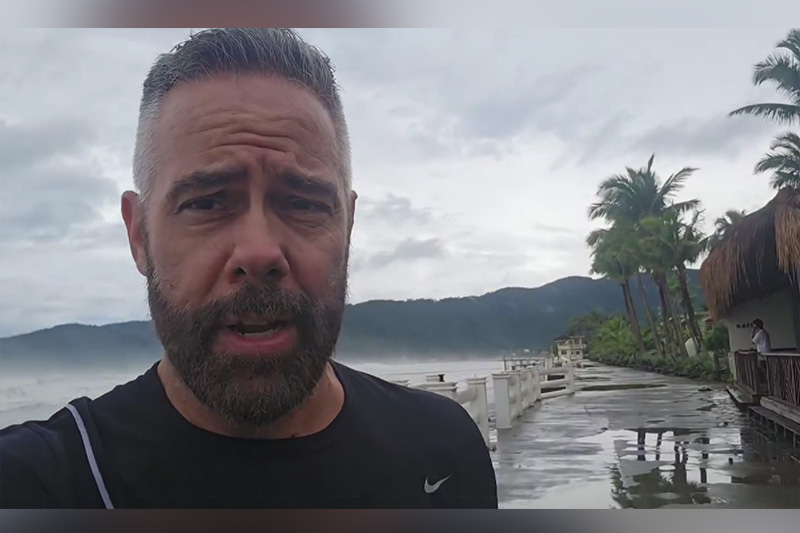
American multimedia journalist and international storm chaser Jordan Hall posted videos of his encounter with the tropical cyclone, including an incident he described as the “scariest moment” of his life.
Hall was staying at a hotel in Dipaculao, Aurora, where “Uwan” made landfall on the evening of November 9.
“Significant storm surge at our hotel earlier almost swept multiple people. Scariest moment of my life,” he wrote, sharing two videos with different angles.
Hall also shared a video showing ocean water flooding a building despite it being low tide, the period when the sea is at its lowest level.
“Low tide is ending and Typhoon FungWong (Uwan) is starting to wear out the coastline. Storm surge has already gutted multiple buildings and [is beginning] to destroy the road. We haven’t even gotten to high tide… We are prepared and buckled up, but conditions are about to deteriorate rapidly,” he said.
In another Facebook post, Hall reflected of the Filipino people, noting their “resilience.”
“The culture and mindset of the Filipino people just [keep] inspiring me. So resilient and so tough. I absolutely love the people,” he said.
Hall also urged Filipinos to “send any support” to La Sunshine Beach Resort, which required renovations after being damaged the super typhoon.
Meanwhile, James Reynolds, a British storm chaser for “Earth Uncut TV,” also shared videos of his experience, showing a hotel with its windows and doors destroyed after a “huge wave smashed into the sea wall in Baler.”
He also shared another video showing sea waves crashing against the waterfront.
Reynolds also shared videos showing roads destroyed in the aftermath of the super typhoon.
American storm chaser Josh Morgerman, or “iCyclone,” also tracked Uwan’s in Baler, where a wave knocked him over a seawall and and into a patio railing.
“I’m ok — just scratches and bruises. A good lesson about respecting the power of water!” he exclaimed.
He likewise shared a video of waves crashing into the hotel’s restaurant.
Morgerman also shared a nighttime situation in the area and reasoned that it “never got too crazy” since Baler “was in the left eyewall, so winds were blowing offshore.”
“The chief impact seemed to be the large destructive waves which pounded the seawall, inundated buildings, and damaged property,” he said.
A Filipino observer noted that the presence of storm chasers in the country usually signals that a tropical cyclone poses a “serious threat.”
“When storm chasers start flying in, you know it’s not just another typhoon, it’s a serious threat. This is more than weather; it’s a warning. Let’s not wait for disaster to strike,” the X user wrote over the weekend, sharing a screengrab of Morgerman’s post.
“Prepare now, stay alert, and keep each other safe,” the X user added.
When storm chasers start flying in, you know it’s not just another typhoon, it’s a serious threat. This is more than weather; it’s a warning. Let’s not wait for disaster to strike. Prepare now, stay alert, and keep each other safe. #uwanph #tinoph pic.twitter.com/7Owalrvssw
— PJ RN ☤ (@iamprincejanrn) November 7, 2025
A storm chaser is an individual who pursues severe weather for research, photography, or thrill-seeking adventure. They travel to areas where extreme weather is forecast in order to observe or study it firsthand.
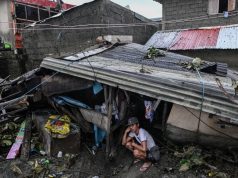
Meanwhile, Uwan unleashed torrential rains and destructive winds across Luzon and Visayas, reaching super typhoon strength on November 9. It made landfall in Aurora Province, killing at least two people.
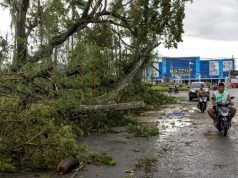
Uwan damaged infrastructure, including roads, and caused widespread power outages with its life-threatening storm surges and typhoon-force winds. The typhoon also triggered severe flooding in parts of Metro Manila and rendered major roads impassable across multiple regions.