


Content warning: The following report contains references to a school shooting, including deaths and injuries.
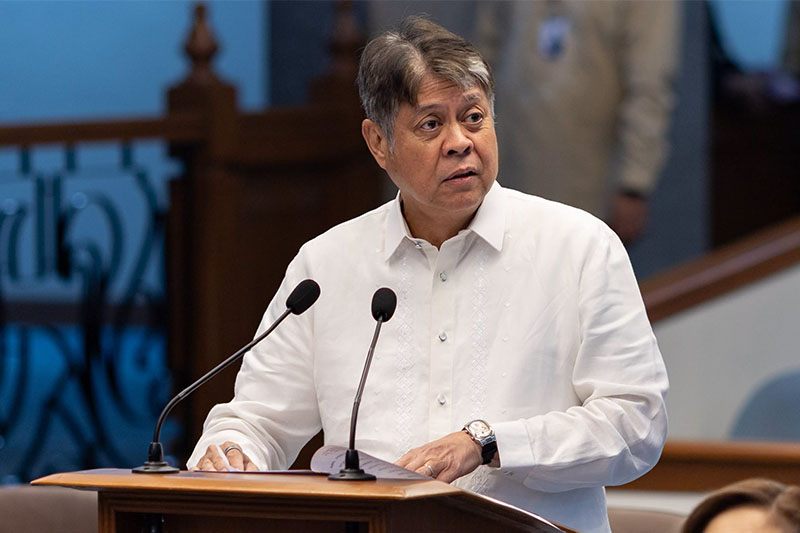
Sen. Kiko Pangilinan, author of the Juvenile Justice Law, said that minor suspects in the Tacloban City school shooting will still be held accountable amid claims to the contrary.
The senator on Monday, June 22, spoke out against false claims concerning the Republic Act 9344, or Juvenile Justice and Welfare Act, which covers children at risk and children in conflict with the law.
The law came into focus amid discussions about the shooting at the San Jose National High School on the morning of June 22.
The incident has left three students dead and at least 20 people injured, 15 of whom sustained firearm-related injuries.
The perpetrators were two male minors, aged 14 and 15, enrolled in Grades 9 and 10.
The Grade 9 student was described by a teacher as a “repeater” who was supposed to be in Grade 10 already.
Police said the incident was “planned,” noting that the suspects had already begun firing outside the school buildings.
One of them allegedly used a firearm belonging to his aunt, a female police officer in Eastern Visayas, during the shooting. Authorities said she was the one who taught him how to use the firearm.
The female police officer has been relieved of her duties pending an investigation into how her nephew was able to access her firearm.
Police Col. Allen Rae Co, chief of the Public Information Office of the Philippine National Police, said that due to the severity of the crime, the shooter may be considered a “neglected child” and will be placed in a juvenile facility administered by the Department of Social Welfare and Development (DSWD).
Some Filipinos, upon learning that the crime was allegedly committed by minors, blamed the Juvenile Justice Law for the incident, claiming that it does not hold minors accountable for such acts.
Pangilinan, however, clarified that the law does hold them accountable, saying there is a “process” and an “intervention” to ensure that such incidents do not happen again.
“MAY PANANAGUTAN ANG MGA MENOR DE EDAD NA NASASANGKOT SA KRIMEN,” he wrote in a Facebook post.
“Marami pa ring maling impormasyon tungkol sa Juvenile Justice and Welfare Act. May pananagutan. May proseso. May mga intervention upang matiyak na hindi na ito mauulit,” the senator added.
“May pananagutan din ang mga magulang. May tungkulin naman ang pamahalaan — sa pamamagitan ng DSWD at iba pang ahensya — na magbigay ng suporta sa mga biktima, kanilang mga pamilya,” Pangilinan further said.
He also said it is “illegal” to release minors involved in crimes, adding that doing so has consequences for those responsible.
“Ang tunay na hamon ay hindi ang pagpapakalat ng takot at disinformation, kundi ang ganap na pagpapatupad ng batas at pagtiyak na may hustisya, accountability, at proteksyon para sa lahat ng bata,” the senator added.
Pangilinan also released a statement on the Tacloban killings, saying that he extends his “heartfelt condolences” to the families of the victims.
“Mariin kong kinokondena ang pamamaril na nangyari sa loob ng paaralan. Walang lugar ang karahasan sa ating lipunan, lalong-lalo na sa mga lugar na dapat ay ligtas para sa mga bata,” he said in another post.
The senator also called for a strict implementation of the law he authored.
“Nananawagan ako ng mabilis, ganap, at tamang pagpapatupad ng Juvenile Justice Law. Hindi pwedeng pakawalan ang mga suspek kahit menor de edad. Dapat dumaan sila sa prosesong itinakda ng batas,” Pangilinan said.
“Sa ilalim din ng batas, may pananagutan ang mga magulang ng mga suspek kung naging pabaya. Itinatakda rin ng batas na kailangang bigyan ng DSWD ng karampatang suporta ang mga biktima at ang kanilang mga pamilya hanggang makamit nila ang katarungan,” he added.
What the law says
The Juvenile Justice Law states that children 15 years of age or younger at the time of the crime shall be exempt from criminal liability but shall be subject to an intervention program.
However, the exemption from criminal liability “does not include exemption from civil liability, which shall be enforced in accordance with existing laws,” according to Republic Act 10630, which contains amendments to the law.
The law also states that the authority with initial contact with the child has a duty to release the child into the custody of their parents, guardian, or relative, in consultation with the local social welfare and development officer.
“The child shall be subjected to a community-based intervention program supervised by the local social welfare and development officer, unless the best interest of the child requires the referral of the child to a youth care facility or ‘Bahay Pag-asa’ managed by LGUs or licensed and/or accredited NGOs monitored by the DSWD,” it added.
The law further states that children exempt from criminal responsibility (those above 12 years up to 15 years of age) who commit serious crimes such as murder, “shall be deemed a neglected child under Presidential Decree No. 603, as amended, and shall be mandatorily placed in a special facility within the youth care faculty or ‘Bahay Pag-asa’ called the Intensive Juvenile Intervention and Support Center (IJISC).”