

The Catholic Church’s social action and justice arm has called for an end to political dynasties, saying dismantling entrenched political clans is a crucial step toward curbing corruption in the country.
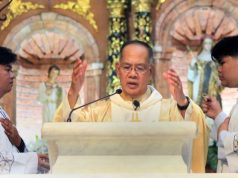
Bishop Gerardo Alminaza, chair of the CBCP Episcopal Commission on Social Action–Justice and Peace, said corruption will persist unless the nation confronts the political families that have dominated government for decades.
“An Anti-Dynasty Law should be passed without delay,” Alminaza said. “Some clans have dominated politics for decades. Yet even newer politicians in national leadership seem to quickly expand their reach through the election or appointment of their relatives.”
The bishop, who also serves as president of Caritas Philippines, urged the public “not to tolerate political dynasties,” saying it is time for fresh, qualified candidates to lead the government.
“[We must] stand together and continue our advocacy until measures for non-repetition and accountability are fully achieved,” Alminaza said.
The prelate said the push for reform reflects a broader moral demand from Filipinos who “are seeking the truth.”
“Corruption must finally end; nothing less will do. This is also the moment for our nation to pass a genuine anti-dynasty law,” he added.
According to the Philippine Center for Investigative Journalism, at least 18 political dynasties with five or more members in public office won seats in the May 2025 elections.
Spread across Luzon, the Visayas and Mindanao, the clans include the Marcos, Duterte, Singson, Ortega, Villar, Romualdez, Hataman-Salliman, Pacquiao, Dimaporo and Tan families.
“Many of the regions where obese political dynasties rule remain poor,” Alminaza said, adding that social services in these areas often fail to reach marginalized communities.