
Some Laguna residents expressed support for Gov. Sol Aragones’ decision to shift all public and private schools in the province to distance learning for the remainder of October due to the perceived threat of an earthquake.
The move to suspend face-to-face classes has sparked discussion online.
The Department of Education previously suspended in-person classes in public schools in Metro Manila from October 13 to 14 due to the rising incidence of influenza-like illnesses.
Laguna has followed suit and called off physical classes as well, but according to Aragones, this was to allow authorities time to prepare and ensure students’ safety in the event of a strong earthquake.
Instead, classes will shift to the Alternative Delivery Mode (ADM), which includes online and modular learning.
The remainder of October will also be used to allow families to prepare emergency provisions amid the threat of a major tremor, especially since the West Valley Fault runs through the province.
The West Valley Fault is capable of generating a magnitude 7.2 or stronger earthquake in Metro Manila—an event often referred to as “The Big One.” Experts say the fault is due for another significant movement, as its last major shift occurred in 1658 and it has a recurrence interval of 400 to 600 years.
Meanwhile, Aragones’ post about Laguna’s temporary physical classes suspension drew mixed reactions online, with some questioning the decision and pointing out that earthquakes cannot be accurately predicted.
“‘Possible earthquake’? Earthquakes are not predictable, it just happens or does not happen. Earthquakes are not like tropical storms that can be tracked and, therefore, somewhat predictable. What’s wrong with this governor?” an online user said.
“Kung walang pasok kasi may posibilidad na lumindol, e baka forever ng walang face to face classes sa Laguna. Sa Pilipinas po normal ang lindol kasi nasa Ring of Fire tayo. Nag-consult man lang ba sa Phivolcs tungkol dito?” another asked.
“Fearmongering naman si Sol. Besides, paano kung buong Oktubre walang lindol pero sa araw na bumalik sila, lumindol. Mape-predict mo ba ‘yun? ‘Di naman, ‘di ba?” another Pinoy asked.
Some Filipinos, particularly Laguna residents, defended the governor’s move, saying the time would allow authorities to evaluate and ensure students’ safety in the event of a strong earthquake.
“For me, as a parent, mas okay na ‘to kesa mag-alala ako na nasa school ang mga anak ko at doon abutan ng lindol,” a Facebook user commented.
“Bilang magulang, kahit mahirap mag-modular, pabor sa’min, hindi kami mag-aalala na baka mapano anak namin sa school, lalo na ang mga buildings sa school namin ay hanggang [fourth] floor,” another said.
“Bilang taga-Laguna at magulang na laging nangangamba sa nangyayari ngayon, naging kampante ako sa ginawang desisyon ni Gov. Sol.. May pagkakataon din makapaghanda at ma-check [ang] mga gusali ng bawat paaralan,” a different Pinoy commented.
“Bilang taga Laguna, initially, I questioned the Governor’s decision. However, upon evaluating the situation—particularly the preparedness of schools during calamities — it appears to be a wise and proactive measure. Given the current spread of influenza, it also helps safeguard students’ health,” another wrote.
On Tuesday, October 14, Aragones also posted videos showing her inspecting school buildings, accompanied by the province’s engineers and disaster response team.
“Kaya kami nag-iinspect, kasi tinitingnan namin ‘yung sitwasyon dahil, Aldwin, kapag lumindol… ito bagyo lang, matindi na, paano pa kapag lumindol — ‘wag naman sana, no,” she said.
“So hindi po kami nananakot, ang gusto lang namin ay maging handa, ano po. Kung in case na bumalik na ‘yung mga bata dito, sa mga classroom nila, ano ang gagawin. Kailangan natin i-identify,” Aragones added.
Recent quakes
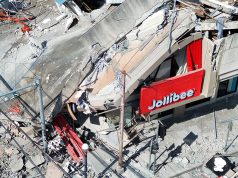
Recently, several strong earthquakes have struck different parts of the country, including a magnitude 6.9 quake in Cebu on September 30, a magnitude 7.4 and a magnitude 6.8 in Davao Oriental on October 10, and a magnitude 6.0 in Surigao del Sur on October 11.
However, the Philippine Institute of Volcanology and Seismology (Phivolcs) clarified that these earthquakes are unlikely to trigger movement along the West Valley Fault, as the affected areas are too far apart.
“Magkakaiba din ang generators ng paglindol natin. Iba ang fault system natin. Yung sa West Valley Fault, ‘yung sa The Big One na tinatawag natin would come from the West Valley Fault,” Phivolcs Director Teresito Bacolcol told GMA’s “Unang Hirit.”
He also said that the “Big One” could happen before, during, or after the year 2058, which is calculated by adding 400 years, the lower limit of the fault’s recurrence interval—to the last time the fault moved in 1658.
“It means that as we get closer to 2058, the probability of this thing recurring is increasing,” Bacolcol said in an interview with ANC.
The West Valley Fault runs approximately 100 kilometers through Bulacan, Metro Manila and Calabarzon, making it one of the country’s most closely monitored fault systems.
Bacolcol also said that it is possible to experience successive or simultaneous earthquakes, as the Philippines has 180 active fault segments and six active trenches.
Government agencies continue to encourage households, schools, and offices to prepare emergency kits, identify safe evacuation routes and reinforce structures.
— with reports by Philstar.com/Ian Laqui