


Tech takes over?
A neighborhood once filled with children’s noise and giggling now echoes with the blips and dings of screens.
This is what Jessie and the gang aim to bring back, the joy of playtime, in the latest Pixar movie, “Toy Story 5,” which was released on June 17 in local cinemas.
The animated film highlights the growing concern over children’s technology use and screen time.
READ: ‘Toy Story 5’ pits traditional toys vs a tablet. In real life, families can combine the two | ‘Toy Story 5’ tackles tech tensions and tween girl trials
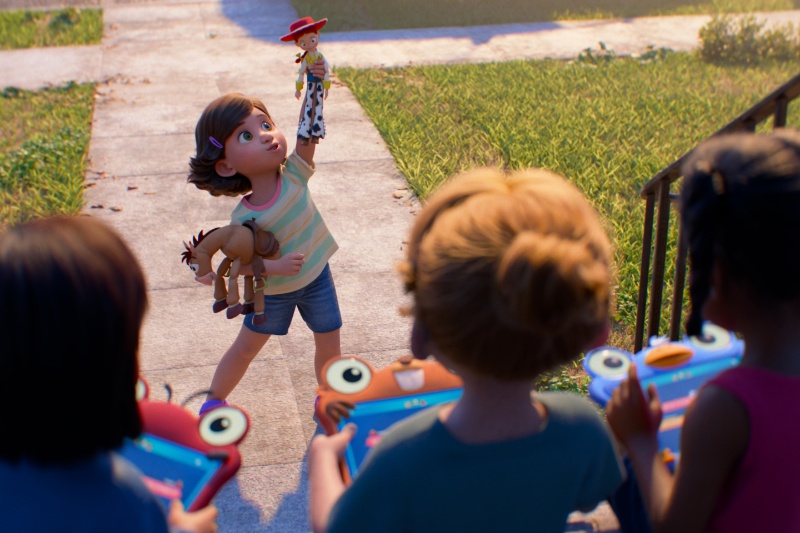
With the increasing use of electronic devices among the kids, Bonnie struggles to make new friends, as many children in the neighborhood are glued to their screens.
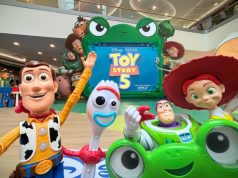
To solve the problem, her parents buy her a “Lilypad,” a frog-like table device that allows her to play and communicate with other kids online. The screen-based gadget becomes a threat to the toy gang.
However, Jessie refuses to let that happen on her watch, especially as Bonnie slowly loses interest in toys and begins to resemble the other kids more and more.
As fewer children are seen playing in the streets, the film becomes a mirror of today’s reality among kids.
It presents the benefits of technology, such as communicating with peers online, bit it ultimately highlights how it can negatively affect young individuals.
For instance, Bonnie becomes transfixed on her Lilypad as she tries to keep up with her peers who are already ahead in mobile games.
In some scenes, she is no longer the “Bonnie” the toys knew, as she begins to change her likes and interests to conform to the standards set by the virtual world.
The latest “Toy Story” sequel reflects what a child like Bonnie may experience when exposed online, such as peer pressure, fear of social exclusion, and social masking.
It also serves as a reminder, not just for kids but for adults, to be the ones who guide and help children manage their digital use and create a safe online environment.
While the film does not directly offer solutions to the rising issue of prolonged technology exposure and screen time, it still raises awareness, not only among kids but also among adults, about the effects of technology on children.
Despite being a kids’ movie, it resonates with adults who may experience the same situation as Bonnie.
It also reminds everyone to be kind to others on the other side of the screen, as no matter their age, everyone deserves to be themselves.
Healing inner child
Jessie is not the only one who reminisces about her past, as adults who watch “Toy Story 5” do as well.
One might say “good old times,” as the film retains the same vibe and joy of seeing and hearing familiar characters.
It also features humorous moments among the characters, such as Buzz and Woody’s playful banter and Woody’s baldness.
The iconic characters Woody, Buzz and Jessie are still voiced by Tom Hanks, Tim Allen, and Joan Cusack, respectively.
Meanwhile, Greta Lee also joins the cast, voicing Lilypad, while Conan O’Brien, Craig Robinson and Shelby Rabara lend their voices to new characters.
Other cast members include Scarlett Spears, Mykal-Michelle Harris, Matty Matheson, John Ratzenberger, Wallace Shawn, Blake Clark, Jeff Bergman, Anna Vocino, Annie Potts, Bonnie Hunt, Melissa Villaseñor, John Hopkins, Kristen Schaal, Ernie Hudson, Keanu Reeves, Benito Antonio Martínez Ocasio or Bad Bunny and Alan Cumming.
Director Andrew Stanton, along with co-director Kenna Harris and producer Lindsey Collins, helmed the film.