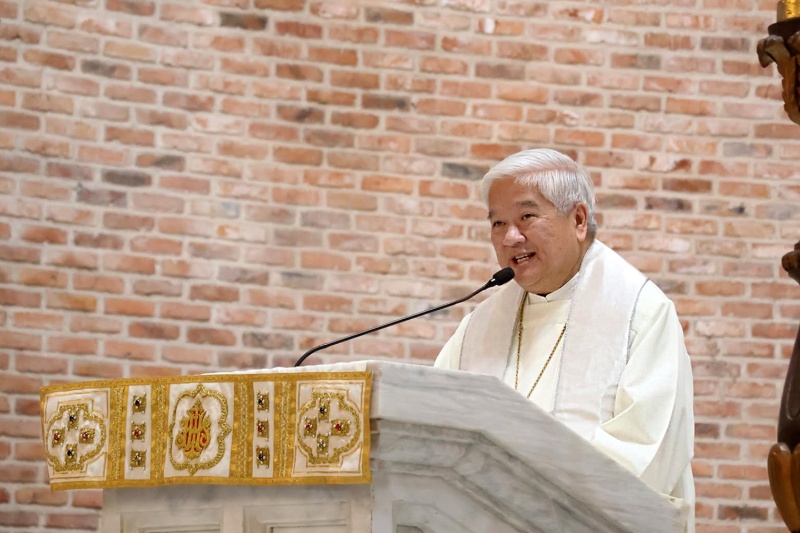



Archbishop Socrates Villegas has urged his clergy in the Archdiocese of Lingayen-Dagupan to register as organ donors, saying their example could inspire more Filipinos to give others a second chance at life.
In a statement described as a “fraternal appeal,” Villegas said he wanted to add “my shepherd’s voice” as the nation marked National Organ and Blood Donation Awareness Week during the last week of June, encouraging clergy to prayerfully consider organ donation as a concrete expression of Christian charity.
“As your archbishop, I am asking each of you to consider the gift of life through organ donation,” Villegas said. “I hope the example we set as willing organ donors can inspire our parishioners to do the same.”
He encouraged priests to declare their willingness to become organ donors when applying for or renewing their driver’s licenses and discuss their decision with relatives before death.
“As Christians, we believe that death is not the end but a new beginning,” he said. “Organ donation while we are still alive, and especially after we have died, is a witness to our hope that life is more powerful than death.”
Villegas described organ donation as “a gift of ourselves so others may live” and said it reflects Christ’s passion and resurrection, through which “his death gave rise to eternal life.”
The archbishop also cited the teachings of St. John Paul II, Pope Benedict XVI and Pope Francis, who have described organ donation as an ethically acceptable act of love, charity and universal fraternity when carried out according to moral principles.
He said about 550 Filipinos are waiting for kidney transplants, while many others need liver and lung transplants. Behind every patient, he said, is a family praying for another chance at life.
“Alongside each patient, there is a family that is waiting for another chance at life for their parent, their sibling, or their child,” Villegas said.