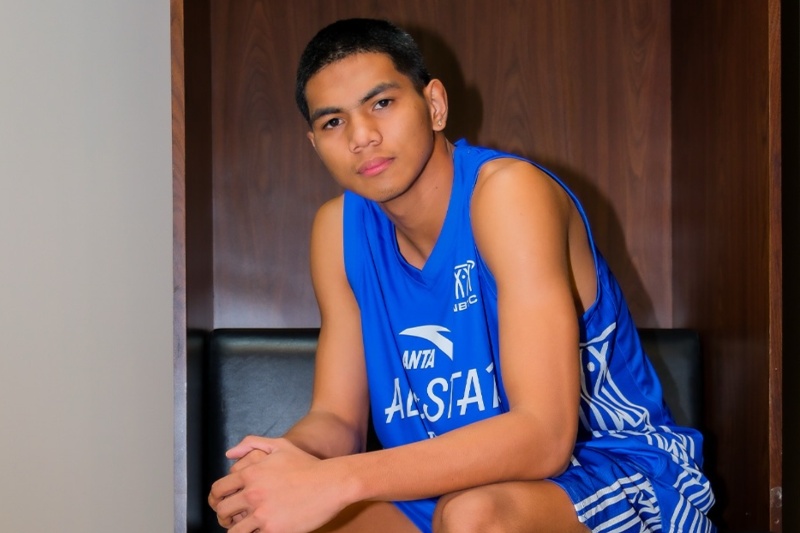



Filipinos weighed in on the latest footage released by the Aurora Provincial Police Office which showed the rescue efforts for Atenean student-athlete Rene Baterbonia during a team-building activity.
The video showed Baterbonia being carried by two individuals from the water toward the shore. More people joined the rescue effort before they reached land.
He was reportedly about 40 to 50 meters from the shoreline and floating when he was recovered.
Once Baterbonia was laid on the shore, someone attempted to perform Cardiopulmonary Resuscitation or CPR.
He was then moved onto his side, after which water poured from his mouth.
The footage, which appeared to show Baterbonia responding upon reaching the shore, drew reactions from Filipinos, some of whom speculated that he might have survived had proper resuscitation efforts been administered immediately.
Angel Librero, team leader of the rescue team of the Aurora Municipal Disaster Risk Reduction and Management Office (MDRRMO), said in an interview that Baterbonia was subsequently brought to the Aurora Memorial Hospital.
She also said that one of the students initiated CPR on Baterbonia upon reaching the shore.
However, Librero said she stopped the procedure because she wanted him transported to the nearest hospital while resuscitation efforts continued.
She said the hospital was “around 10 to 15 minutes” away from the site.
Librero also described the condition of Baterbonia and Divine Adili, another student-athlete from Nigeria, as “unstable” when rescuers found them, adding that they needed to be brought to a hospital immediately.
She said rescuers did not observe any signs of breathing when they recovered the two students, prompting them to transport them to the hospital without delay.
The footage, which appeared to show Baterbonia responding after CPR was administered, sparked discussions among Filipinos, with some claiming that his life could have been saved.
WATCH: Drone Footage of the Actual Rescue of Rene Baterbonia
On June 8, it was reported that Rene Clert “Bobet” Baterbonia and his teammate, Divine Adili of Ateneo de Manila University, drowned during a team building activity at a resort in Dipaculao, Aurora Province. https://t.co/HNuq98F9Mf pic.twitter.com/EFAbLu0KYt— Evildoer. (@Maduka1008) June 15, 2026
“OMG, kita sa last part naglalabas na siya ng tubig, malaki chance sana mabuhay ang bata kung tinuloy lang CPR tapos saka muna pag-transfer kapag may pulso na siya uli, bakit naman ganoon, nakaka-p***** *** naman,” a Filipino wrote.
“He could’ve been saved pa talaga! Nasuka niya pa ‘yung tubig. Kung ‘di lang sana pinahinto ‘yung CPR!” another X user commented.
Another X user, who identified as a nursing student, said the video “raises more questions,” citing Baterbonia’s apparent responsiveness after CPR was administered.
“If there was still visible water coming from Rene’s mouth while CPR was being performed, then the public deserves a clear explanation of the exact medical decisions that were made and the timeline of those decisions,” the X user wrote.
“What happened during those critical minutes? Why was he transferred at that point? Were all emergency protocols followed? These are questions that cannot simply be brushed aside,” the X user added.
“Hindi dapat itinigil ang CPR. Normal lang na maglabas ng water or fluid ang victim, lalo kapag drowning ang case, pagsimula ng chest compressions — the right thing to do was turn him to the side to drain it then ibalik ulit sa supine position then continue the CPR,” the X user said in another post.
“The crucial part about draining fluid is ‘wag tagalan because it can cause lack of oxygen sa brain, ibalik agad siya dapat sa nakahigang position then continue CPR. Nung nireport sa rescue team na may nalunod, may dala na sana silang AED, if wala, may pananagutan din sila,” the X user added.
AED stands for Automated External Defibrillator, a portable device used in emergencies to analyze a person’s heart rhythm and, when necessary, deliver an electric shock to help restore a normal heartbeat.
“But based sa footage, I don’t believe that Rene was lifeless, he could’ve survived if they continued the CPR since naglabas siya ng water or fluid, then sana if kinumpleto nila ‘yung cycles, ginamitan na nila ng AED. They cannot transfer him unless mabalik ang pulse,” the X user continued.
“CPR shouldn’t be stopped unless there’s a rhythm or pulse check. If the patient still has no pulse, compressions should resume right away. That’s basic CPR — something any well-trained rescuer should know,” another X user, who identifies as a registered medical technologist and doctor, said.
An online user who claimed to be a Basic Life Support trainer with training in Aquatic Life Support said that “standard hands-only CPR” is “ineffective” in drowning cases.
“Aquatic protocols utilize the ‘Five Initial Breaths’ Rule as the universal standard for drowning [plus], resuscitation, delivering two to five rescue breaths immediately upon reaching safety to flood the lungs with oxygen before chest compressions begin,” the X user said.
The American Heart Association reported that “rescuers should immediately begin CPR” to “anyone removed from the water with no signs of normal breathing or consciousness.”
“Trained rescuers should initiate CPR by giving two rescue breaths followed by 30 chest compressions. If the rescuer is unwilling, untrained or unable to provide rescue breaths, it is reasonable to provide chest compressions only until help arrives,” it said.
“Research shows people who have cardiac arrests from non-heart-related causes such as drowning are more likely to survive when CPR includes rescue breaths, compared to when they receive compressions only,” it added.
“CPR for cardiac arrest due to drowning must focus on restoring breathing as well as restoring blood circulation,” physician Cameron Dezfulian said.
Meanwhile, police said that Baterbonia and Adili died after drowning when they were swept away by strong currents during a school-sanctioned team-building activity on a beach resort on June 8.
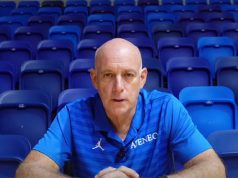
The activity was led by resigned Ateneo Blue Eagles head coach Tab Baldwin, who has faced allegations of abusive behavior toward students, particularly females, from his estranged wife and stepdaughter.
The Philippine National Police’s Criminal Investigation and Detection Group (CIDG) said its probe into the deaths of Baterbonia and Adili is now focused on possible homicide or hazing charges.
CIDG Director Police Major Gen. Robert Morico II said investigators are examining whether the training activity that preceded the drowning incident could fall under the country’s anti-hazing law.