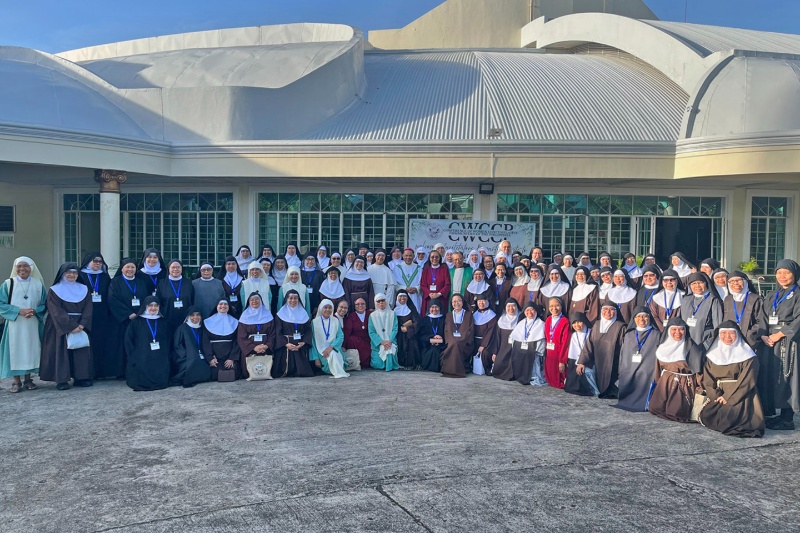



TALISAY CITY, Cebu— On the eve of Ash Wednesday, the head of the Catholic Bishops’ Conference of the Philippines urged contemplative women to turn inward, seeking wholeness of mind, heart, and spirit through prayer, reflection, and community.
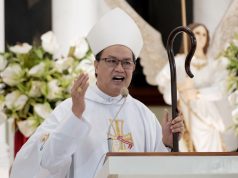
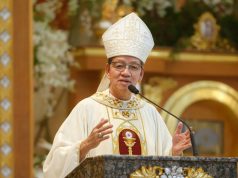
Speaking at the St. Francis Seraph Retreat Center during the National Conference of Women Contemplatives of the Philippines on Feb. 17, Archbishop Gilbert Garcera said Lent is not only a season of fasting but also a journey of spiritual transformation.
“May this Lent be a time of embracing wholeness, integrating mind, heart, and spirit, leading us into the fullness of God’s grace,” he said.
Drawing from the Gospel of Mark, the archbishop reminded participants that human anxiety and distraction often obscure God’s presence.
“Watch out; beware of the yeast of the Pharisees and the yeast of Herod,” he said, quoting the Gospel today.
He added that prayer, meditation, and love can quietly transform both individuals and their communities, like yeast working from within the dough.
Garcera also cited the Vatican’s Apostolic Letter Vultum Dei Quaerere, emphasizing that Scripture must guide contemplatives’ daily lives and nourish authentic spiritual communion.
“It teaches that the Word of God is the first source of our spirituality,” he said.
He encouraged contemplatives to be beacons of hope, faithfully witnessing God’s presence even amid uncertainty.
“We journey together, supporting one another in prayer, understanding, and hope, nourished by the Word of God and united in contemplation,” Garcera said.
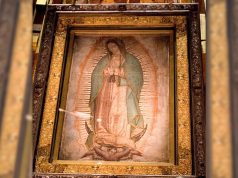
Invoking Mary’s example of simplicity, humility, and unwavering trust in God, Garcera encouraged contemplatives to witness hope even amid uncertainty.
“May her example inspire us to be contemplatives of hope, nourished by the Word, and witnesses of authentic communion for the Church and the world,” he said.
Below is the full text of Archbishop Garcera’s homily:
My dear sisters and brothers in Christ,As we gather on this eve of Ash Wednesday, the threshold of Lent, the Church invites us into a journey—an inner pilgrimage of reflection, conversion, and hope. The Gospel today, taken from Mark, reminds us of the human tendency to be distracted, to be anxious, and to fail to see the signs of God’s presence: “Watch out; beware of the yeast of the Pharisees and the yeast of Herod.” Yet, in the same passage, Jesus challenges His disciples to remember and to see, saying, “Do you not yet understand? Do you not remember?”
This question resonates deeply with our life as contemplatives. In the silence of our cloisters and the depth of our prayer, we are called to embrace wholeness—not just in our thoughts or our devotion, but in mind, heart, and spirit. Lent is a time when the world turns its eyes outward, but for us, it is a call to turn inward: to reconcile with God, with ourselves, and with one another as a community journeying together.
First, wholeness of mind calls us to vigilance. Jesus’ warning about the “yeast” is a call to discernment. In our contemplative life, distractions may be subtle: doubts, forgetfulness, or the quiet voices of fear. Lent invites us to examine our inner landscapes, to bring clarity and understanding, and to cultivate attentiveness in our prayer, study, and meditation.
Second, wholeness of heart challenges us to authenticity in love. Jesus asks His disciples to remember His words, to see beyond what is immediate. For us, the heart of contemplation is not simply feeling, but faithful attentiveness to God and to our brothers and sisters. We are called to love fully, with patience, compassion, and hope—even when the world seems burdened with fear, division, or sorrow.
Third, wholeness of spirit is a call to hope. Contemplatives are called to be beacons of hope, witnesses to the presence of God even when all seems uncertain. As Jesus rebuked the disciples for their lack of understanding, He also invites us to deeper awareness: to see beyond our limitations, to trust in God’s guidance, and to journey together as a community that embodies hope.
Here, the Apostolic Letter Vultum Dei Quaerere offers us a particular challenge. It teaches that the Word of God is the first source of our spirituality. “This Word must nourish our life, our prayer, our contemplation, and our daily journey. The document reminds us that you should be “a living ‘exegesis’ of God’s word”(rf.2). It is meant to “become the principle of communion for our communities and fraternities. We are called to welcome that Word, meditate upon it, contemplate it, and then bring it into practice—communicating and sharing the fruits of this encounter with God. In doing so, we grow in an authentic spirituality of communion, which strengthens our journey together and sustains our hope.”(rf. 19)
As we prepare to enter Lent tomorrow, let us remember that our journey is not solitary. Just as yeast spreads and transforms dough from within, so too our prayer, reflection, and love transform not only ourselves but the community around us. We journey together, supporting one another in prayer, understanding, and hope, nourished by the Word of God and united in contemplation.
May this Lent be a time of embracing wholeness: a wholeness that integrates mind, heart, and spirit, and leads us into the fullness of God’s grace. Let us be contemplatives who see with clarity, love with authenticity, and hope with perseverance—bringing light into the world, not with noise or spectacle, but with quiet, faithful presence.
And as we journey together in this sacred season, may Mary, the contemplative of Nazareth, guide us with her simplicity, humility, and unwavering trust in God. May her example inspire us to be contemplatives of hope, nourished by the Word, and witnesses of authentic communion for the Church and the world.