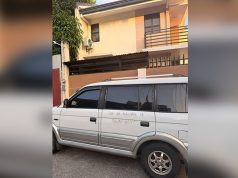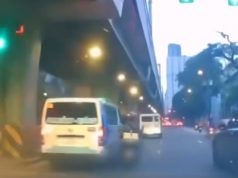


A driver drew criticism for switching his sedan’s plate number, which many assumed was an attempt to evade Metro Manila’s number coding scheme.
Automotive publication VISOR shared a video submitted by a reader showing a man attaching a white plate to a sedan on Friday, January 23.
After standing up from his position, he was seen carrying an older plate with green text.
The move sparked backlash from some Filipinos, who speculated that he was trying to avoid being apprehended for allegedly violating the number coding rules.
The post has received 3,000 likes and reactions and over 600 comments from Facebook users.
Some commenters speculated that the older plate number was ZAS 450, while the new white displayed TLO 312.
“Galawang sindikato, the transporter,” a Facebook user commented.
“And that’s how you beat Coding. Paano pa kaya kung green plate pero naturally aspirated engine hahahaha,” another wrote.
“Kawatan ‘yan o ‘yan ‘yung Pinoy Culture na ‘diskartehan,'” a different Pinoy commented.
“Gumamit ng pinagbabawal na teknik,” another Facebook user wrote, tagging the page of the Land Transportation Office (LTO), the agency issuing driver’s licenses.
“May kilala ako, binabaklas din plaka, conduction sticker ang ginagamit para daw iwas coding. Isuzu Travis,” commented another Pinoy.
“Para-paraan para hindi mahuli sa coding,” a different Facebook user said.
“Bawal ‘yan, ‘di ba?” another commented, tagging the LTO.
License plates serve as proof that a vehicle is properly registered and legally allowed on public roads.
They are essential for official identification, enabling authorities to monitor vehicles and enforce traffic rules and regulations. Plates also act as a primary identifier in cases of vehicle theft or loss.
The Land Transportation and Traffic Code states that a license plate number is permanently assigned to a vehicle for its lifetime.
As such, a vehicle must have only one plate and cannot display multiple plates.
However, some drivers have resorted to switching plates as a way to evade Metro Manila’s number coding scheme, which reduces road congestion by restricting vehicles from operating during rush hours on certain days based on the last digit of their plates.