


Cebuanos affected by the deadly magnitude 6.9 earthquake are invited to participate in a free online post-calamity psychosocial session to help them process their emotions and experiences.
The Philippine Mental Health Association (PMHA) Cebu Chapter is facilitating the psychosocial sessions throughout October for those impacted by the powerful tremor on September 30, which claimed at least 72 lives.
READ: Death toll from Cebu quake rises to 72
The session aims to provide a “safe space” where participants can share and process their emotions and experiences following the natural disaster.
The PMHA Cebu Chapter said participants will be grouped into five smaller groups “for more in-depth sharing and processing.”
The session will be guided by trained mental health professionals and volunteers and conducted via Google Meet.
Children, students and community members experiencing shock and distress are encouraged to attend.
For the October 3 and October 4 sessions, the facilitator will be Jaycel Bay, a registered guidance counselor and trained Level 1 Internal Family Systems (IFS) Therapist.
“In moments of fear and uncertainty, let’s hold on to each other,” the PMHA Cebu Chapter said.
“Let’s hold space for one another as we heal together,” it added.
They can also schedule a later psychosocial support by sending an email to [email protected].
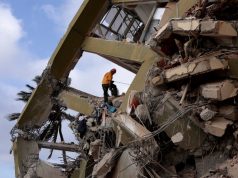
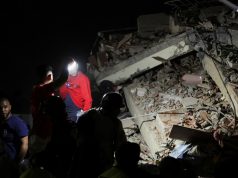
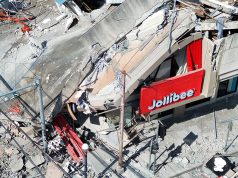
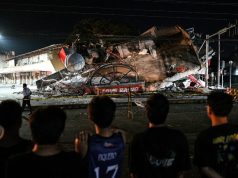
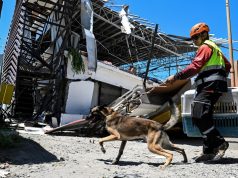
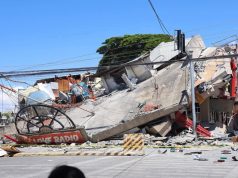
On the evening of September 30, a shallow magnitude 6.9 earthquake struck waters off the central island of Cebu, resulting in casualties and damage to infrastructure such as power lines, bridges, and multiple buildings.
The disaster was the country’s deadliest earthquake since at least 2013, when a 7.2-magnitude quake hit the neighboring island of Bohol, killing 222 people.
Despite the gravity of the tragedy, hundreds of agents from at least 10 business process outsourcing (BPO) companies in Cebu were reportedly forced to return to work shortly after the incident.
READ: Cebu earthquake jolts homes as family huddle together for safety | Watch: Magnitude 6.9 quake damages church in Bantayan as tremors cause widespread damage | NHCP offers guidance in protecting historic objects after magnitude 6.9 quake in Cebu
Mental health
Research notes that post-traumatic stress disorder, or PTSD, may develop after a disaster, leading to significant mental health consequences.
ALSO READ: What to do if you find it hard to move on from recent earthquakes
Psychologists and psychiatrists believe that survivors of life-threatening disasters often develop PTSD, an anxiety disorder triggered by extremely stressful or frightening events.
People with PTSD may “relive the event through flashbacks or nightmares; they may feel sadness, fear or anger; and they may feel detached or estranged from other people,” the American Psychiatric Association noted.
“People with PTSD may avoid situations or people that remind them of the traumatic event, and they may have strong negative reactions to something as ordinary as a loud noise or an accidental touch,” it continued.
High rates of PTSD were observed among survivors of a deadly magnitude 9.0 earthquake that struck northeastern Japan in 2011.
— with reports by Reuters, Philstar.com/Dominique Flores