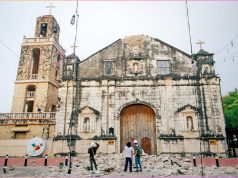


NHCP offers guidance in protecting historic objects after magnitude 6.9 quake in Cebu

October 1, 2025 - 8:00 AM
1911
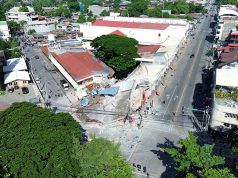
(Jerick Nin̈o Rosell Bojos via NHCP/Facebook)

The National Historical Commission of the Philippines (NHCP) has issued an advisory for heritage caretakers following the magnitude 6.9 earthquake that struck Cebu and nearby areas on Tuesday, September 30.

A magnitude 6.9 earthquake struck northeast of Bogo City, Cebu, at 9:59 p.m. on Tuesday, according to the Philippine Institute of Volcanology and Seismology (Phivolcs).

The tremor was felt at Intensity V in several areas, indicating strong shaking. Phivolcs explained that Intensity V is typically felt by most people indoors and outdoors, with noticeable rocking of buildings.

In some areas, Instrumental Intensity VI was also recorded. At this level, vibrations resemble the passing of a heavy truck, and hanging objects swing considerably.

Following this, the NHCP, through its Materials Research Conservation Division, expressed its solidarity with affected communities and offered prayers for families impacted by the disaster.

“Our prayers for the affected families. Please keep safe,” the commission said.

The agency reminded the public, especially those in charge of cultural and historical properties, to prioritize safety and coordination with local authorities before taking any action.

“Please do not attempt to enter structures without prior coordination with authorities and after ensuring that aftershocks are no longer felt,” the NHCP advised the public.

The commission also released practical guidelines to help caretakers secure and preserve movable heritage objects that may have been damaged during the earthquake.

These are the following:

1. Secure the premises of the structure and protect entry and exit points to deter kibitzers and unnecessary people from entering. You can use barricades and caution ribbons for this.
2. Check the stability of the structure before doing any retrieval/salvage work. Wear protective clothing ( i.e. hard hats, appropriate gloves, brightly colored clothes) before entering the premises of damaged buildings.
3. Document/take photographs of damaged objects. Be wary of debris that might fall down on you.
4. With utmost care, retrieve and wrap the objects if possible with japanese tissue/clean cloth on sturdy boxes, taking as many broken parts as you can. If circumstances permit, label and group various broken parts together for easier identification later. It is IMPORTANT to retreive at the soonest time, the damaged objects as they are prone to further damages (should aftershocks occur, or heavy rains, etc.) and in the case of damaged and unguarded buildings, thieves and vandals.
5. If time and circumstances permit, it is recommended that other undamaged moveable objects be also retrieved for protection.
6. Bring the retrieved objects to a safe place identified by the heritage site administrator/s and away from the damaged structure. Take detailed photographs of damage incurred and label broken parts. Do create a quick inventory which contains the name of the object, measurements, component materials, present condition and damage/s observed.
7. Consult professionals and skilled artisans in the restoration of the damaged objects.

Caution vs social media sharing

The NHCP also warned against indiscriminate sharing of damage photos online, as these could be used by potential displacers, thieves and unwanted personages to locate vulnerable heritage sites.

“Your personal safety is of utmost concern. Do not attempt to enter damaged buildings without consultation and coordination with site administrators and experts,” the NHCP said.
It also encouraged the public to report any heritage-related incidents through its social media pages or email at [email protected] / [email protected].

—Rosette Adel