

Catholic education institutions are pushing back against a proposal to abolish the senior high school program, warning that such a move would roll back years of progress in preparing Filipino students for college and the workforce.
Implemented under the Enhanced Basic Education Act of 2013 and launched in 2016, SHS added two years to the basic education cycle to align the Philippines with international standards and improve job readiness.
Recent calls to remove SHS from the curriculum have drawn sharp criticism from education stakeholders, who describe the proposal as “dangerously shortsighted.”
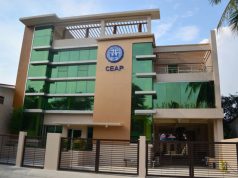
“Flaws in execution should not be mistaken for flaws in the framework,” the Catholic Educational Association of the Philippines (CEAP) and the CBCP Episcopal Commission on Catholic Education (ECCE) said in a joint statement.
“Rather than breaking what is still being built, the government should commit to a full review of SHS implementation and institute reforms necessary without sacrificing its gains,” they said.
Critics of SHS have pointed to issues such as curriculum overload, teacher shortages, and unclear employment outcomes for graduates.
However, education advocates argue these concerns stem from implementation challenges — not from flaws in the program’s design.
The SHS program, according to CEAP and ECCE, “was not an accident of policy but a product of vision… one that sought to raise our education system to meet international benchmarks and respond to the evolving needs of Filipino learners and the labor market.”
More than 1.2 million students are currently enrolled in private SHS institutions through government-funded vouchers.
The institutions said eliminating SHS would not only waste years of investment from both the public and private sectors, but would also disproportionately affect students in underserved and remote communities.
Instead of scrapping SHS, they urged the government to expand the voucher system, strengthen partnerships with industries, and invest in upscaling teachers and streamlining the curriculum to reflect both local and global labor demands.
“This proposed regression undermines not just policy but promise,” they said. “We should double down on fulfilling the original vision of SHS — equipping Filipino youth with the tools, competencies and values needed for success in life and nation-building.”
Last month, Senate President Pro Tempore Jinggoy Estrada filed a measure seeking to rationalize the country’s basic education system by removing the SHS program.
He argued that SHS has “not fully achieved its goal” of producing skilled and job-ready graduates, despite being implemented since 2016.