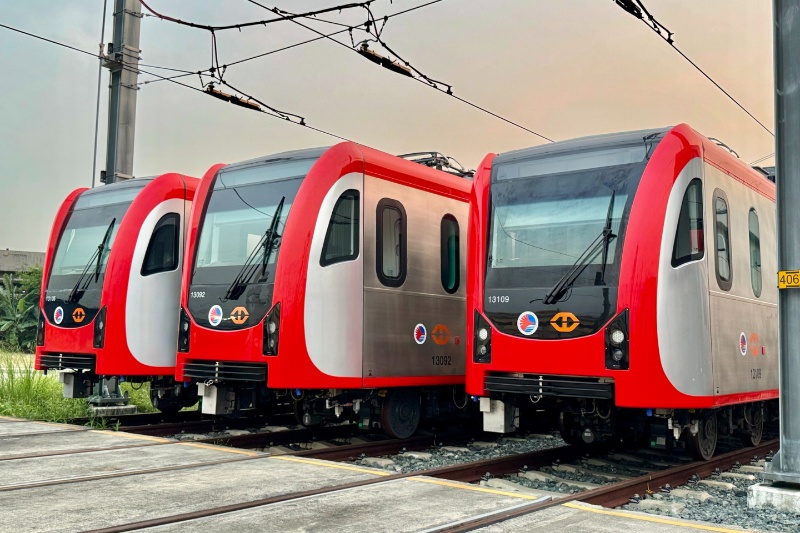


For many commuters, an LRT-1 ride is routine, tap a Beep card, wait for the train, move through Metro Manila’s corridors of work and daily life.
However, beneath that familiar movement runs a parallel track of history, where stations are not just stops, but markers of revolution, resistance and nation-building.
From the Cry of 1896 to modern democratic movements, the line quietly traces the evolving story of Philippine freedom.
On the 128th Independence Day, it is worth revisiting how this route reflects key moments in Philippine nationhood.
Revolution remembered
Long before it became a bustling transport hub, Balintawak was the site of one of the most defining moments in Philippine history.
It was here that the “Cry of Balintawak” marked the beginning of the 1896 Philippine Revolution, as Andres Bonifacio and members of the Katipunan tore their cedulas in defiance of Spanish colonial rule.
By ripping these certificates, the Katipuneros signaled the end of submission and the start of armed resistance under the “Kataastaasang, Kagalanggalangang Katipunan ng mga Anak ng Bayan” (KKK).
Nearby, Blumentritt station reflects a different but equally important front in the struggle for nationhood, intellectual resistance.
While today it is known for its dense markets and commuter traffic, the station is named after Ferdinand Blumentritt, the Bohemian scholar and close confidant of Jose Rizal.
He defended “Noli Me Tangere” against critics and wrote introductions to “El Filibusterismo” and *Sucesos de las Islas Filipinas”, helping strengthen the Propaganda Movement that laid intellectual groundwork for independence.
From colonial stronghold to public space
Further along the line, Central Terminal sits near two contrasting symbols of Philippine history: Intramuros and Liwasang Bonifacio.
Intramuros stands as a reminder of Spanish colonial power, where Jose Rizal was once detained at Fort Santiago before his execution at Luneta.
Just outside its walls, Liwasang Bonifacio now serves as one of Manila’s designated freedom parks, used for public assemblies and civic expression.
This proximity captures Manila’s transformation—from a fortified colonial capital to a space where public voice and national identity continue to evolve.
Freedom shaped
The story of independence was not written only by national heroes but also by local leaders and communities.
Vito Cruz Station, named after Hermogenes Vito Cruz, a 19th-century Pasay mayor linked to revolutionary efforts, reflects how resistance extended into local governance and everyday life.
As the area evolved, so did its identity—from historic street names to a modern district shaped by universities, sports venues, and student culture.
Modern resistance
At the southern end of the line, EDSA Station connects commuters across Metro Manila and beyond, linking rail systems and provincial routes that make it one of the network’s busiest transit points.
It also carries the legacy of Epifanio de los Santos, a historian and scholar who contributed to revolutionary journalism as associate editor of Antonio Luna’s “La Independencia”.
Beyond its association with the 1986 People Power Revolution, EDSA reflects a broader idea of resistance, one rooted in historical truth, civic action, and the continuing struggle against oppression.
These historical narratives along the line are also featured in the LRT-1’s ikotMNL Heritage Transit Tour, developed with cultural group Renacimiento Manila, which offers guided storytelling across key stations.