

ROME— A Filipino priest in Italy is proposing a strategic shift in pastoral care to address evolving needs among the growing Filipino migrant community.
Father Gregory Ramon Gaston, national coordinator for Filipino chaplains appointed by the Italian Bishops’ Conference, outlined what he described as a “forward-looking” initiative.
The proposal emphasizes accelerating integration of Filipino faithful into local Italian parish life, rather than maintaining separate community-based structures for worship and ministry.
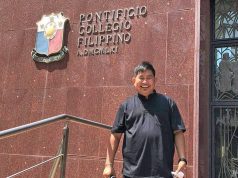
Gaston, also the rector of the Pontificio Collegio Filippino, said the approach does not replace Filipino traditions but seeks a sustainable pastoral model responding to long-term demographic and cultural changes.
Ready for deeper participation
He noted many Filipino adults in Italy now possess sufficient Italian language skills to participate actively in parish liturgies and ministries.
“Filipino adults in Italy have acquired a working knowledge of Italian, which is sufficient for them to actively participate in the liturgy and ministries of Italian parishes,” Gaston said.
Rise of new generations
A significant shift is also evident among younger generations, many of whom are Italian citizens and more fluent in Italian than Philippine languages.
“Their spiritual formation and sense of belonging may now be intrinsically tied to the Italian Church,” he said.
Sustainability of clergy
Gaston also cited growing global demand for Filipino chaplains, which he said is unsustainable given priest shortages in the Philippines.
He noted the country’s faithful-to-priest ratio remains significantly higher, underscoring the need for more sustainable pastoral strategies abroad.
The proposed model calls for stronger collaboration between Filipino communities and Italian parish clergy to foster deeper participation at the local level.
“This new model calls for a collaborative spirit,” Gaston said.
He encouraged Italian parish priests to extend personal invitations, particularly to young people, to engage in ministries and community activities.
Such involvement may include catechesis, youth ministry or serving as lectors during liturgical celebrations, he said.
The initiative draws on longstanding Church teaching on migrant ministry, emphasizing integration alongside existing pastoral structures rather than replacement.
Gaston cited St. John Paul II’s 2001 World Migration Day message, which said migrant pastoral structures should complement territorial parish care and eventually integrate with it.
He said integrating Filipino faithful into local parishes would help ensure sustainable pastoral care while strengthening their contributions to the Church’s mission in Italy.
“By focusing on local integration, the community’s spiritual care will be sustained long-term,” Gaston said. “(They) will also become contributors to the life and mission of the Church in Italy.”